Understanding how to identify black mold is an important part of maintaining a healthy and stable home, especially in Upstate South Carolina. With the region’s high humidity, frequent rainfall, and common crawl space construction, conditions are often ideal for mold growth—even in homes that appear well-maintained on the surface.
Many property owners first notice mold as dark spots on walls, ceilings, or in bathrooms. But not all mold that appears black is the same, and not all visible growth tells the full story. Mold often develops in hidden areas before becoming visible, which makes early identification especially important.
This guide breaks down how to identify black mold, how it compares to mildew and other types of mold, where it typically forms in homes across the Upstate, and what steps to consider if you suspect a problem.
For additional context on how mold develops in this region, this overview of black mold in South Carolina homes explains how local conditions contribute to mold growth over time.
Before identifying black mold, it helps to understand why it appears so frequently in homes throughout Greenville County and surrounding areas.
Several regional factors contribute to ongoing moisture exposure:
Even small moisture events—like a slow leak or condensation buildup—can create the right conditions for mold to begin forming. In many cases, mold growth starts within a short timeframe after water exposure. This breakdown of how quickly mold can develop after water damage highlights how fast this process can occur.
Because moisture is the driving factor, identifying mold is often less about spotting a specific color and more about recognizing patterns tied to moisture and airflow.
Black mold is often described as dark green or black in color, but its appearance can vary depending on the surface and moisture level.
Common visual characteristics include:
However, it’s important to understand that:
Because of this, identifying black mold is often about combining visual cues with environmental context—where it’s growing, how it’s spreading, and whether moisture is present.
One of the most common points of confusion is how to identify black mold vs mildew. While both are types of fungi, they behave differently and appear differently.
If a surface can be cleaned and the growth does not return, it may have been mildew. If it returns repeatedly or spreads, it is more likely to be mold.
Beyond mildew, many homeowners want to understand how black mold compares to other types of mold commonly found indoors.
Regular mold may appear in a variety of colors, including green, white, or brown. It often forms quickly after minor moisture exposure and may stay relatively localized.
Black mold, on the other hand, is more commonly associated with:
In practical terms, the distinction matters less than the presence of mold itself. Any mold growth indicates a moisture problem that should be addressed to prevent further spread.
In homes across the Upstate, mold rarely appears randomly. It forms in predictable locations tied to moisture patterns.
Common areas to inspect include:
One of the earliest indicators is often a musty smell, even before visible mold appears. Over time, visible spotting may develop in areas where moisture remains trapped.
For homes with crawl spaces, mold often develops below the home before affecting indoor air. This guide on crawl space mold warning signs can help identify early indicators.
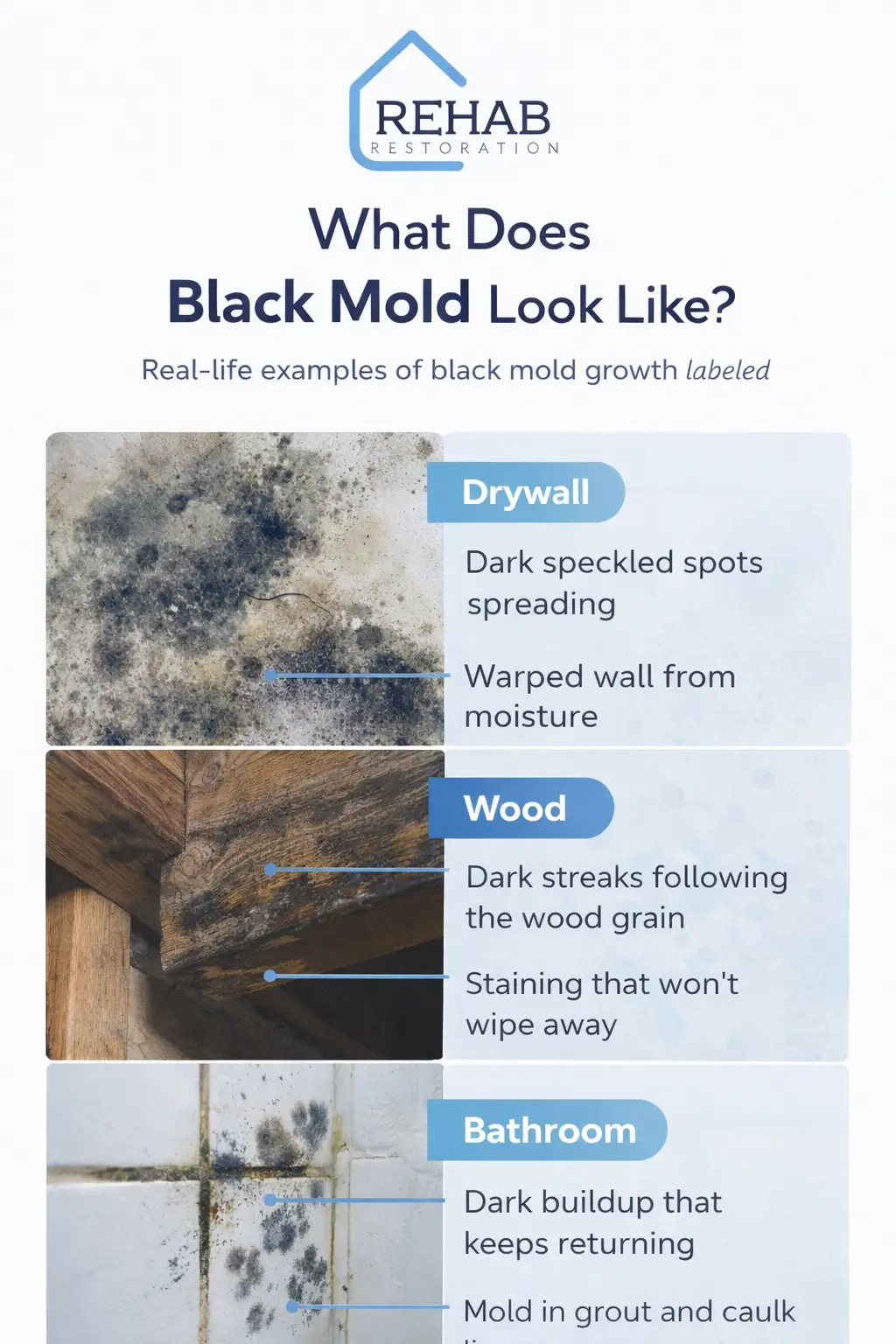
Drywall is one of the most vulnerable materials in a home because it absorbs moisture easily.
Signs of mold on drywall include:
Because drywall is porous, mold often grows beneath the surface before becoming visible. In some cases, visible mold is only a small part of a larger hidden issue.
Wood framing, subfloors, and support beams are also common areas for mold growth, especially in crawl spaces or basements.
Look for:
In many Upstate homes, crawl spaces create ongoing exposure to ground moisture, which allows mold to develop slowly over time.
When mold is found in these areas, solutions may involve addressing both the mold and the moisture source, such as ventilation or encapsulation improvements.
Bathrooms are one of the most common areas for mold due to constant moisture and limited airflow.
Typical signs include:
While some bathroom mold may initially resemble mildew, repeated regrowth often indicates a deeper issue, such as trapped moisture behind tile or drywall.
One of the biggest challenges with mold is that it often grows in areas that are not visible.
Common hidden locations include:
Signs of hidden mold may include:
In these cases, visual inspection alone may not provide enough information to fully understand the extent of the issue.
While many homeowners begin by identifying mold visually, there are situations where additional evaluation is helpful.
These include:
In these scenarios, a professional evaluation through mold inspection services can help determine where mold is present and what conditions are contributing to its growth.
If you believe you’ve identified black mold in your home, the next step is to focus on the underlying cause rather than just the visible growth.
Addressing moisture is key. Without resolving the moisture source, mold is likely to return even after cleaning.
For confirmed issues, working with professionals experienced in mold removal in Upstate South Carolina can help ensure the problem is addressed thoroughly.
If the issue is located beneath the home, crawl space mold removal may be necessary depending on conditions.
Prevention focuses on controlling moisture and improving airflow.
Because regional conditions naturally introduce moisture into homes, ongoing maintenance is often necessary to prevent mold from returning.
Black mold typically appears as dark patches in areas with moisture and may spread over time.
Mildew is lighter and powdery, while black mold is darker and associated with deeper moisture issues.
Yes, drywall absorbs moisture easily, allowing mold to grow both on and beneath the surface.
It is commonly found in bathrooms, crawl spaces, behind walls, and near plumbing areas.
Testing is the only way to confirm the type of mold, especially when growth is hidden or widespread.