Winter in Upstate South Carolina brings fluctuating temperatures, occasional ice storms and plenty of rain. While our winters are milder than those up north, a proactive maintenance approach keeps your home comfortable and helps avoid costly repairs. This checklist offers local, preventative tips so you can enjoy the cooler months with peace of mind.
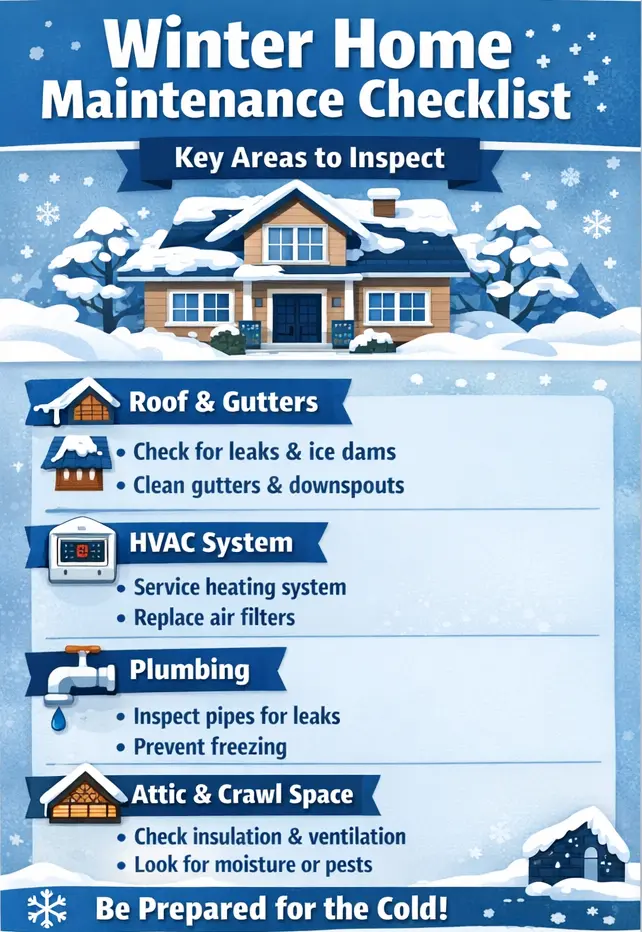
A sturdy roof is your first line of defense against winter storms. Conduct a visual inspection of shingles, flashing and vents. Replace missing or damaged shingles and tighten loose flashing to prevent leaks. Clean gutters and downspouts to ensure water flows away from your foundation. Accumulated debris can create ice dams that cause water to back up under the roof covering:contentReference[oaicite:6]{index=6}. After cleaning, consider adding micro‑mesh gutter guards and, if your property has many trees, heat cables for extra protection against freezing.
Downspouts should extend at least six feet from the home to reduce the risk of basement seepage. In our region, heavy rain can quickly overflow clogged gutters, so check them periodically throughout the season and clean and maintain your gutters before winter.
For more guidance on identifying leaks, explore our article on roof leak detection tips. To understand common issues associated with unmanaged water runoff, see our piece on water damage issues in Greenville County. External experts also emphasize the importance of gutter maintenance and guards.
Proper insulation and ventilation keep your home warm and help prevent moisture buildup. Inspect attic and crawl‑space insulation; add more if you notice exposed joists or cold spots. Ensure vents are unobstructed so warm air circulates freely. Seal gaps around windows, doors and plumbing penetrations with caulk or weatherstripping to eliminate drafts. Using heavy curtains, thermal window treatments and door sweeps can further reduce heat loss. Insulation is critical in order to protect pipes during freezing weather.
To manage moisture beneath your home, consider a vapor barrier or encapsulation system. Our detailed guide on vapor barriers in South Carolina homes explains how these barriers protect against ground moisture. For a comparison of different crawl‑space solutions, read crawl space encapsulation vs. vapor barrier. Energy‑efficiency specialists recommend sealing drafts and improving insulation to lower heating bills.
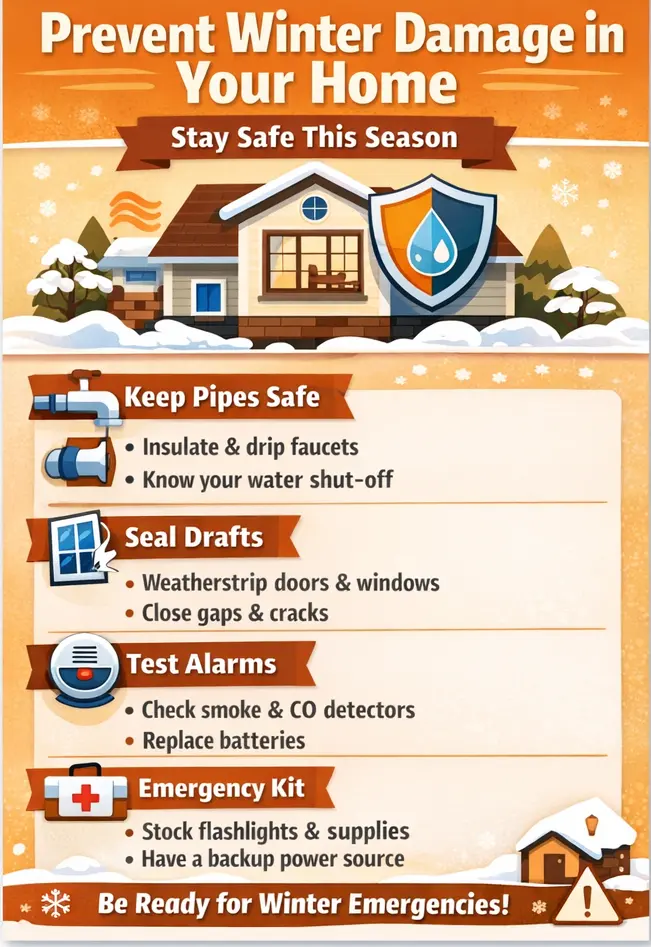
Freezing temperatures are rare but not unheard of in Upstate South Carolina. When forecasts predict a cold snap, insulate exposed pipes in crawl spaces, garages and along exterior walls. Use foam sleeves, heat tape or pipe wraps. Let faucets drip slowly during extreme cold to keep water moving and relieve pressure. Disconnect and drain garden hoses, and shut off water to outdoor spigots. Know the location of your main shut‑off valve so you can act quickly if a pipe bursts.
Our article on what to do after a burst pipe provides step‑by‑step guidance should you experience a plumbing failure. If an unexpected leak results in standing water, see our advice on emergency water cleanup. State officials stress that insulating water lines and allowing faucets to drip are key preventive measures.
Your heating system works hardest during winter. Schedule a professional inspection of your furnace or heat pump to ensure safe, efficient operation. Replace or clean air filters monthly, clear debris around outdoor units and check thermostat settings for optimal energy savings. Ceiling fans should turn clockwise on low speed to push warm air down. Take advantage of sunlight by opening curtains during the day and closing them at night to trap warmth.
Regular HVAC maintenance not only keeps you comfortable but can also prevent condensation‑related moisture issues. Keep registers and vents unobstructed by furniture to promote even airflow. Lifestyle experts note that sealing drafts, adjusting thermostats and improving insulation can significantly lower heating costs.
Walk around your property and examine siding, windows, doors and foundations for cracks or gaps. Repair damaged siding panels and touch up sealant or paint to protect against moisture. Check walkways and driveways for cracks caused by freeze‑thaw cycles; address them before they worsen. Trim overhanging branches that could break under ice and damage your roof or siding.
If humidity increases due to closed‑up homes, monitor for signs of mold, especially in basements and crawl spaces. Our article on effective ways to detect mold provides simple diagnostic tips. For general information on mold removal and prevention, visit how to get rid of mold. Keeping the exterior in good shape also supports curb appeal and long‑term property value.
Winter is a good time to test smoke alarms and carbon monoxide detectors; replace batteries at least once a year. Ensure fire extinguishers are accessible and charged. Assemble an emergency kit with flashlights, blankets, a battery‑powered radio and basic first‑aid supplies in case of power outages. Store important documents in waterproof containers and keep contact numbers for local emergency services handy.
If you suspect any damage after a severe storm or cold spell, do not hesitate to consult professionals. You can contact our local restoration team for guidance tailored to Upstate South Carolina. For seasonal updates, refer to our Winter Home Maintenance Checklist 2025 and explore our free mold inspection in Greenville program for added peace of mind.