Flooded basement? Rehab Restoration responds 24/7 to extract water, dry your home, and prevent mold before it spreads. We handle everything from emergency cleanup to insurance claims — so you can stop worrying and start recovering.
IICRC Certified • Emergency Response Team • Licensed & Insured • On-Site Within Hours
Serving Greenville, Spartanburg, Greer, Anderson, Easley, Simpsonville & surrounding Upstate SC communities
Basement flooding can happen fast in Upstate South Carolina. Heavy rain, failing sump pumps, burst pipes, foundation seepage, and overflowing appliances can all leave you dealing with standing water, soaked drywall, and damaged flooring within minutes. And the longer water sits, the greater the risk of mold, structural damage, and costly repairs.
At Rehab Restoration, we provide complete basement flooding repair services across Upstate SC — from emergency water extraction and structural drying to mold remediation and full damage restoration. Whether you are dealing with a clean water leak from a water heater or black water contamination from a sewage backup, our IICRC-certified team responds fast, documents everything for your insurance company, and restores your home safely.
We arrive quickly and remove all standing water using commercial-grade pumps and extraction systems. Fast removal is the single most important step in limiting damage to your floors, walls, and belongings.
Once the water is out, hidden moisture remains inside walls, under flooring, and in crawl spaces. Our industrial air movers and dehumidifiers dry the structure completely — not just the surface — so damage does not continue after we leave.
Mold can begin growing within 24–48 hours of a flood in South Carolina’s humid climate. If mold is present or at risk of developing, our team handles full remediation to protect your air quality, your family, and your home’s structure.
After drying is complete, we repair what the water damaged — drywall, flooring, trim, insulation, and other affected materials — so your basement looks and functions the way it did before the flood.
We identify what allowed water in and address it. This includes evaluating drainage, gutters, downspouts, sump pumps, and foundation entry points to reduce the risk of it happening again.
We document moisture readings, damage scope, and the full repair process from day one. Our team works directly alongside your insurance company so you are not left managing paperwork during an already stressful situation.

Basement flooding in Upstate South Carolina is rarely random. It is usually tied to a combination of regional weather, soil conditions, and home infrastructure. Understanding what caused your flooding is the first step toward fixing it permanently.
Upstate SC receives significant rainfall throughout the year. When gutters, downspouts, and floor drains are overwhelmed, water has nowhere to go but into the lowest point of your home — your basement or crawl space.
This is one of the most overlooked causes in our region. Clay soil absorbs water, expands, and pushes against basement walls and foundations. Over time, that hydrostatic pressure forces water through small cracks and weak points in the foundation — even in homes that seem otherwise well-maintained.
A sump pump that cannot keep up during a heavy storm — or fails entirely due to a power outage — is one of the most common reasons basements flood in Greenville and Spartanburg area homes.
Cracks in foundation walls, poor yard grading, and clogged exterior drains all allow groundwater to migrate toward and into the basement, especially during prolonged wet periods.
Burst pipes, failing water heaters, leaking washing machines, and clogged plumbing are common interior causes — particularly in older homes built before modern plumbing standards.
Not all basement flood restoration is the same. Clean water from a pipe leak is very different from gray water or black water contamination from sewage backups or outside storm runoff. Contaminated floodwater requires professional cleanup — not a shop vac and fans.

Not every flooded basement starts with inches of standing water. In many homes the warning signs appear gradually — and by the time they become obvious, damage has already spread behind walls, under flooring, and into the structure itself.
Watch for these signs:
A persistent musty smell is one of the first indicators of trapped moisture or early mold growth — even when the basement looks dry.
White mineral deposits, dark staining, or tide marks on basement walls indicate water has been entering repeatedly, even if no active flooding is visible.
Flooring that has shifted, bubbled, or softened underfoot has absorbed moisture. This also signals that subfloor materials may be compromised.
Paint that blisters or peels off basement walls is a sign of moisture pushing through from behind — not a cosmetic issue.
If your basement feels damp or humid long after a rain event or cleanup, moisture is still present somewhere in the structure.
Any visible mold growth — regardless of size — requires professional remediation, not surface cleaning.
If your sump pump failed during a storm, water likely entered areas you cannot see. A visual inspection is not enough.
Water entering through foundation walls or floor joints carries hydrostatic pressure that will continue to worsen without proper repair.
If water came from outside storm runoff, a sewage backup, or an unknown source, it may contain bacteria and contaminants that require professional cleanup.
Any time water reaches outlets, panels, wiring, or appliances, the area must be professionally assessed before re-entry or cleanup.
If you notice any of these signs, do not wait. Mold can begin growing within 24–48 hours of a flood event, and water continues spreading through insulation, framing, and drywall long after the visible water is gone. The longer you wait, the more it costs to fix.
When your basement floods, you need a team that shows up fast, does the job right, and handles the parts you do not want to deal with — like the insurance company. Here is why homeowners across Greenville, Spartanburg, Greer, and the Upstate call Rehab Restoration first.
Flood damage gets worse by the hour. We respond quickly — day or night — to begin water extraction and structural drying before damage spreads further into your walls, floors, and foundation.
We have worked in homes across Upstate SC long enough to know exactly what causes basement flooding here — clay soil pressure, aging infrastructure, overwhelmed drainage systems, and severe storm patterns. That local knowledge means faster diagnosis and better results.
We do not hand you off between companies. From emergency water extraction and dehumidification through drywall repair, mold remediation, and waterproofing, our team handles the entire process start to finish.
We document everything — moisture readings, damage scope, daily drying logs — and work directly with your insurance company throughout the process. Most homeowners tell us this alone takes an enormous amount of stress off their plate.
Our technicians are IICRC certified, meaning they have been trained to industry standards for water damage restoration — not just cleanup. Rehab Restoration is fully licensed and insured, and our team is available 24 hours a day, 7 days a week for emergency response. We are also A+ BBB rated.




















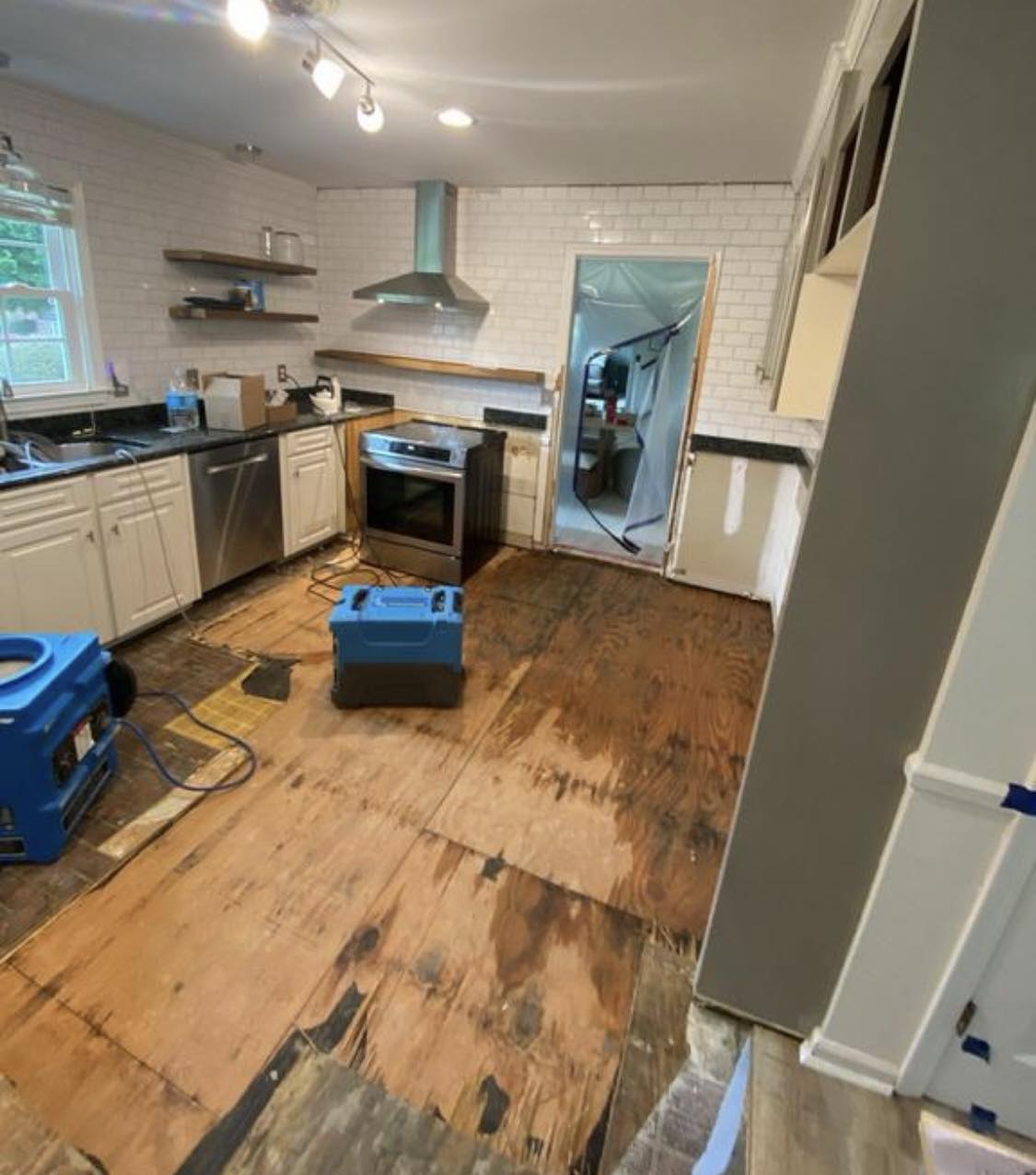
Every basement flood is different, but our process is consistent — designed to move quickly, limit damage, and keep you informed at every step.
We arrive quickly, identify the water source, assess the full extent of the damage, and check for contamination. We also begin the insurance documentation process from the moment we walk in — not after the fact.
Our team extracts all standing water using commercial-grade pumps and extraction equipment. Fast removal is critical — every hour water sits, it moves deeper into walls, flooring, and structural materials.
We place industrial air movers and dehumidifiers throughout the affected area to dry the structure — not just the surface. Moisture readings are taken daily to track progress and confirm drying is complete before moving forward.
Flooded areas are thoroughly cleaned and sanitized using professional-grade treatments. This step is especially important when floodwater may contain gray water or black water contamination from sewage, storm runoff, or appliance discharge.
Once the space is fully dry and cleared, we repair or replace damaged drywall, flooring, insulation, trim, and any other affected materials — restoring your basement to its pre-flood condition.
We conduct a final walkthrough with you to confirm everything meets our standards and yours. We provide complete documentation — moisture logs, damage reports, and repair records — to support your insurance claim and give you a full record of the work completed.
Whether you are dealing with storm flooding, a burst pipe, a failed sump pump, or water backup from heavy rain, Rehab Restoration provides fast emergency basement flood repair throughout Upstate South Carolina. Our team serves homeowners across the region including:
Greenville — including downtown Greenville, Augusta Road, and surrounding neighborhoods
Spartanburg — including Duncan, Boiling Springs, and Inman
Greer — including Five Forks, Taylors, and Reidville Road corridors
Anderson — including Powdersville, Pendleton, and Williamston
Easley — including Pickens County and surrounding communities
Simpsonville — including Mauldin, Fountain Inn, and the Woodruff Road corridor
Travelers Rest — including northern Greenville County communities
Not sure if we serve your area? Call us at (864) 884-2949 — if we can get to you, we will.
A flooded basement can quickly turn into a major structural and mold problem if it is not handled properly. Rehab Restoration provides emergency basement flood cleanup, water removal, mitigation, and repair services throughout Upstate South Carolina.
If you need flooded basement repair near you, our team is available 24/7 to respond.
Immediately. Do not wait to see if the water goes away on its own. Within the first 24–48 hours, moisture spreads into drywall, insulation, and flooring — and mold can begin developing in that same window, especially in Upstate SC’s humid climate. The faster professional drying equipment is in place, the lower your repair cost will be.
Do not enter the basement if you have any reason to suspect electrical systems were exposed to water. Do not walk through standing water without rubber boots. Do not attempt cleanup if the water may contain sewage or outside contaminants. What you should do: call a restoration professional, document everything with photos for your insurance company, and avoid running fans or household dehumidifiers as a substitute for professional drying equipment — they are not powerful enough and can spread contaminated air.
For very small, shallow amounts of clean water — a minor appliance leak on a concrete floor, for example — a wet/dry vacuum and thorough drying may be sufficient. For anything beyond that, professional equipment is necessary. Commercial extractors and industrial dehumidifiers remove water and moisture at a rate household equipment cannot match. Partial drying is one of the most common causes of mold problems and hidden structural damage we see.
It depends on the source. If flooding came from a burst pipe, water heater failure, or plumbing issue, a plumber should address the source before restoration begins. If water reached outlets, wiring, your electrical panel, or any appliances, an electrician must inspect and clear the area before power is restored. In most cases we can coordinate with both — just call us first and we will help you figure out who needs to come when.
It depends on what caused the flooding. Sudden and accidental damage — a burst pipe, water heater failure, or appliance leak — is typically covered under a standard homeowners policy. Water that entered from outside during a storm, rising groundwater, or surface flooding usually requires a separate flood insurance policy, often through the National Flood Insurance Program. We help document and file claims for both — if you are not sure what your policy covers, call your insurance provider and call us. We can help you understand what the damage looks like from a restoration standpoint.
Minor water cleanup and drying for a small area can range from a few hundred dollars to around $1,500. Moderate damage involving drywall, flooring, and full dehumidification typically falls in the $2,000–$7,000 range. Severe flooding with structural repairs, mold remediation, or black water contamination can exceed $10,000 depending on the scope. The most important factor in keeping cost down is response time — the longer water sits, the more it spreads and the more it costs. Many repairs are partially or fully covered by insurance.
Most basements take 3–5 days to dry with professional equipment in place. Severe flooding, larger square footage, or materials like thick concrete walls and hardwood flooring can extend that timeline to 7–10 days or more. We take daily moisture readings throughout the process and do not move to repairs until the structure confirms dry — not just until it looks or feels dry. Skipping this step is how hidden moisture problems and mold develop weeks after cleanup appears complete.
Standard flood insurance through the NFIP generally covers direct physical loss caused by flooding — defined as water that overflows from a body of water or accumulates from sustained rainfall. Coverage for basement spaces is more limited than above-grade areas under most NFIP policies — personal property and many finished basement elements may not be covered. If you have a private flood insurance policy the terms may differ. We recommend calling your insurer directly and we are happy to help you document the damage to support your claim regardless of policy type.